
Politics
Why Reciprocity Isn’t Always Reciprocal — The Case of Electrology in Indiana
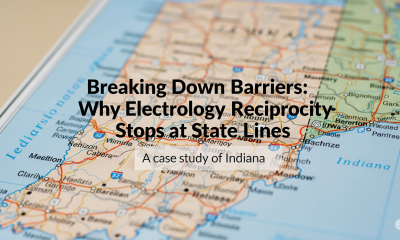
Breaking Down Barriers: Why Electrology Reciprocity Stops at State Lines


As the field of electrology continues to mature across the United States, the inconsistency in state licensing standards remains one of the profession’s most stubborn obstacles. Nowhere is this more evident than in the growing friction between licensed electrologists from other states—such as Illinois—and Indiana’s refusal to grant reciprocity, even to those with decades of safe, professional practice.
The cause of this barrier? It’s not bureaucratic oversight or professional bias—it’s the letter of the law, outlined clearly in the Indiana Code 25-8-4, which sets strict conditions under which reciprocity may be granted to out-of-state applicants.
Understanding Indiana’s Reciprocity Law
Per Indiana Code § 25-8-4, the Indiana State Board of Cosmetology and Barber Examiners is authorized to issue a license by reciprocity only if the applicant meets the following statutory criteria:
“…the applicant holds a license in another state in which the requirements for licensure are substantially equal to or greater than those in Indiana.”
This phrase—“substantially equal to or greater than”—may seem reasonable at first glance, but in practice, it becomes a formidable wall for otherwise qualified professionals.
Why Some States, Like Illinois, Don’t Qualify
States like Illinois do license electrologists, but the educational and practical requirements differ in structure and scope from Indiana’s current regulatory model. For instance:
-
Illinois has recently modernized its approach to electrology education and licensure, including flexible pathways through hybrid training models.
-
Some Illinois programs integrate advanced modalities such as laser hair removal, which Indiana does not require or regulate under its electrology scope.
-
The hour requirement, clinical scope, and curriculum content may vary slightly—even if they produce equally competent professionals.
Under Indiana’s law, any variation in training—regardless of clinical relevance or professional performance—can disqualify an applicant from reciprocity.
A Path Forward: Legislative Alignment, Not Professional Penalization
When Illinois professionals ask, “What’s stopping reciprocity with Indiana?”, they are often met with references to Indiana Code 25-8-4—a statute that leaves no room for board discretion or case-by-case consideration. In short, the board is following legislative orders.
But therein lies the opportunity. If legislators on both sides of the border collaborate, they could:
- Establish equivalency agreements based on shared outcomes, not just classroom hours.
- Create a provisional license pathway for licensed professionals with safe practice records.
- Recognize national credentials, such as CPE or IBEC certification, as reciprocity qualifiers.
- Promote regional harmonization of training standards, easing mobility for a growing profession.
Encouragingly, Illinois has shown a willingness to participate in such collaboration. What’s needed now is legislative momentum in Indiana—an understanding that public safety and professional mobility are not mutually exclusive.
Final Thoughts: Toward a More Unified, Professional Future
Reciprocity, by definition, should support interstate mobility for qualified professionals, not serve as a regulatory wall that penalizes them for geographic differences in training format or curriculum emphasis. Yet for many licensed electrologists in states like Illinois, Indiana’s narrow interpretation of “substantially equal” continues to present a rigid and outdated barrier to practicing their profession across state lines.
This situation highlights a larger truth: in a national industry with a shared purpose—safe, permanent hair removal grounded in science and care—fragmented regulation does a disservice to both professionals and the public.
Qualified electrologists are not asking for lowered standards; they’re asking for recognition of equivalent competence. They’re seeking licensure in a neighboring state, not a waiver of responsibility. And in many cases, their education and practical experience may actually exceed Indiana’s statutory minimums—just in a different format or order.
The legislative rigidity in Indiana Code § 25-8-4 prevents the licensing board from exercising discretion, even when it’s clear that an out-of-state applicant is fully qualified. This is not an issue of safety or standards—it’s a matter of statutory language lagging behind the realities of modern education and practice.
With professions like electrology continuing to grow, diversify, and modernize, it’s time for states like Indiana to take a leadership role in updating reciprocity policies to reflect current best practices. This could include:
-
Creating mutual recognition agreements with neighboring states that share similar professional objectives and scopes of practice.
-
Allowing for provisional or conditional licenses for out-of-state professionals who can demonstrate comparable training and experience.
-
Establishing an advisory equivalency committee to evaluate out-of-state credentials on a case-by-case basis.
-
Supporting a national minimum standard for core electrology education, so that professionals can move more freely without starting over.
Ultimately, reciprocity is not just a legal issue—it’s an equity issue. When qualified professionals are blocked from practicing because their home state’s regulations don’t match Indiana’s “substantially equal” language, the public loses access to competent care, and the profession loses momentum toward unity and recognition.
As Indiana continues to refine its regulatory framework, embracing legislative collaboration with states like Illinois is not only logical—it’s essential. The integrity of the profession depends not only on maintaining high standards, but also on recognizing them wherever they occur.

A Parallel Barrier: The Case of Kansas
While Indiana’s reciprocity law hinges on whether another state’s education and licensure requirements are “substantially equal or greater,” Kansas introduces a different kind of obstacle—one that is equally vague and potentially exclusionary: the requirement of one year of work experience.
For electrologists licensed in Illinois and hoping to relocate or practice in Kansas, the challenge lies not in the number of education hours—Illinois requires 600 hours, exceeding Kansas’s minimum of 500—but rather in a lack of clearly defined standards for what qualifies as “one year of work experience.”
According to Barbara Greenhouse, a board member of the Kansas Board of Cosmetology, the requirement is intended to mean one year of relevant electrology work experience—not general employment. But this interpretation is not explicitly stated in the published regulations, leaving newly licensed professionals, particularly recent graduates, in a bureaucratic gray area.
What Can Be Done? A Path Forward in Kansas
Barbara Greenhouse has suggested that applicants who recently completed their licensure in another state, but who have not yet accumulated a year of experience, may pursue reciprocity by:
- Contacting their Kansas State Representative,
- Reaching out to the Governor’s Office, and
- Demonstrating that they’ve met or exceeded Kansas’s curriculum requirements.
This includes submitting evidence of completing more than the required 500 hours of training—such as the 600 hours mandated by Illinois.
However, this route is time-consuming, highly individualized, and lacks a guaranteed outcome. In effect, it discourages newly credentialed electrologists from entering the Kansas workforce unless they delay their relocation or take on temporary work in another state first.
National Pattern, Local Solutions
Just like Indiana, Kansas illustrates how subtle gaps or ambiguities in licensing language—such as undefined “work experience” or “substantial equivalency”—can undermine mobility for qualified electrologists. This not only impacts professionals but also limits access to care for clients in underserved areas.
Rather than creating vague or discretionary barriers, states could:
- Define “work experience” clearly in regulation,
- Offer provisional licenses for recent graduates with complete education,
- Create reciprocity agreements with neighboring states that already meet or exceed their standards.
Reciprocity Should Be Predictable, Not Political
Both Indiana and Kansas highlight a national truth: the word reciprocity implies fairness and ease—but in practice, it often means navigating a tangle of undefined terms, bureaucratic interpretation, and political persuasion. Professionals deserve better.
Whether the barrier is curriculum interpretation or undefined work experience, the electrology field benefits when state boards, legislators, and professionals work together to remove ambiguity and open doors—not close them.




Politics
Illinois’ proposed Electrology School Bill under IDFPR
Illinois’ electrology ambassador, Margaret Vaughn, is once again advancing legislation to strengthen and expand electrology school standards.

Politics
Mayors agree, Congress should invest in affordable housing
Temporibus autem quibusdam et aut officiis debitis aut rerum necessitatibus saepe eveniet ut et voluptates repudiandae.

Politics
Congress rolls out ‘Better Deal,’ new economic agenda
Neque porro quisquam est, qui dolorem ipsum quia dolor sit amet, consectetur, adipisci velit, sed quia non numquam.

Hello world!

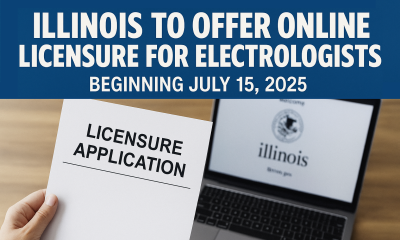
A Bright Future for Electrologists as Illinois Brings Licensing Online

Electrology in Canada: A Provincial Overview
-
 Regulations1 year ago
A Patchwork of Standards: Navigating Electrology Licensure in the U.S.
-
 Regulations9 years ago
Understanding Florida’s Electrology Licensing Requirements
-
 Regulations1 year ago
A Bright Future for Electrologists as Illinois Brings Licensing Online
-
 Regulations1 year ago
Electrology in Canada: A Provincial Overview
-
 Tech1 year ago
A Bright Future for Electrologists as Illinois Brings Licensing Online
-

 Entertainment9 years ago
Disney’s live-action Aladdin finally finds its stars
-
Sports9 years ago
Steph Curry finally got the contract he deserves from the Warriors
-
Sports9 years ago
Phillies’ Aaron Altherr makes mind-boggling barehanded play